Should Airbnb Offer Pre-Arrival Groceries?
A Concept Testing Case Study

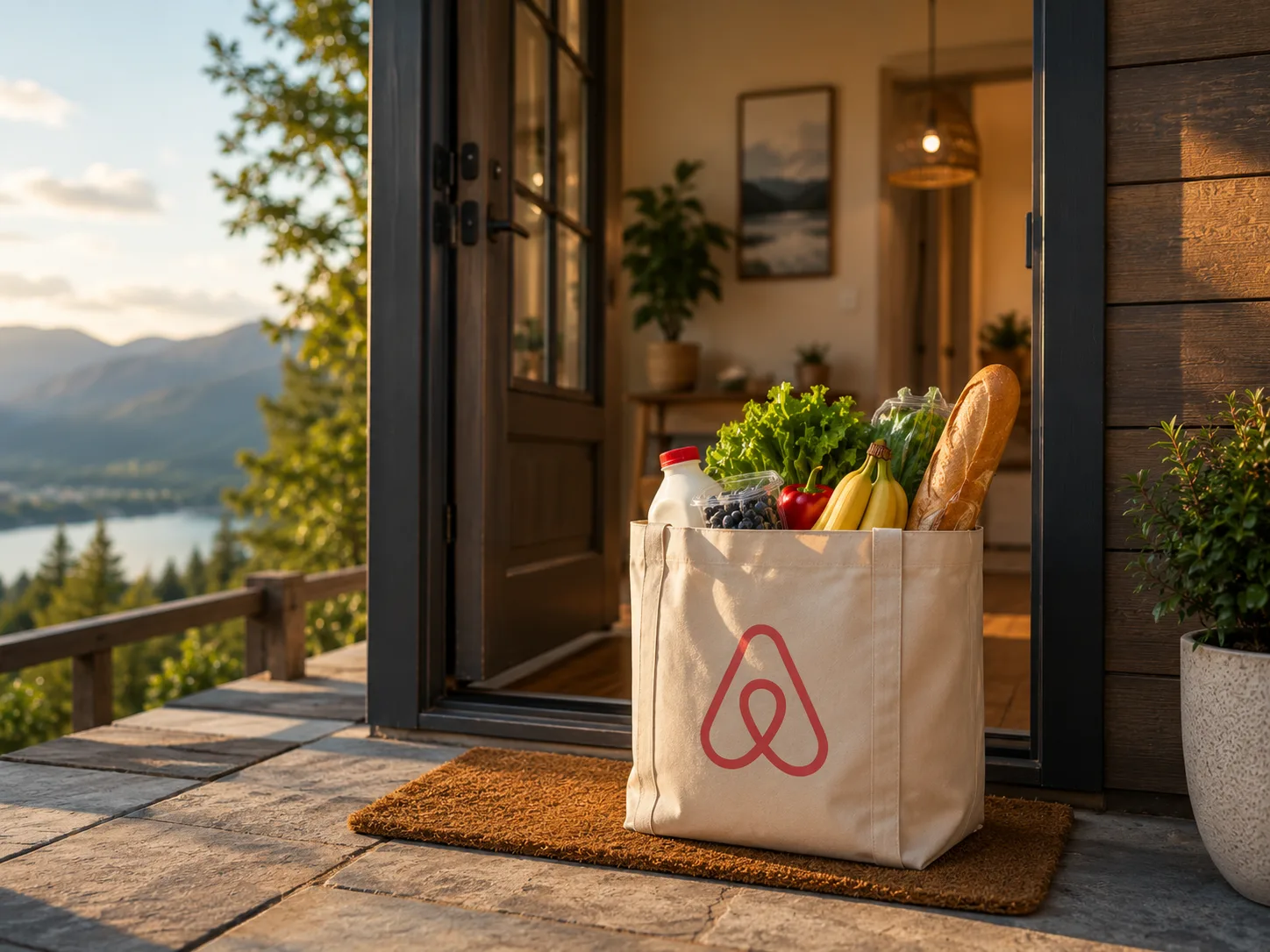
A lot of product ideas sound obvious in a strategy meeting. Of course guests would want groceries waiting for them when they arrive at an Airbnb. Who wants to land after a long travel day, find the rental, unpack the bags, and then immediately search for a grocery store?
But customer interest is rarely that simple.
In this concept test, SignalRise explored whether recent short-term rental guests would actually use a pre-arrival grocery service — what made the idea appealing, what would stop them from using it, and which trip contexts created real demand.
The question
The business question was simple:
Would guests value the ability to order groceries before arrival and have them waiting at their short-term rental when they check in?
Underneath that question were several more important product questions:
- Is this a real pain point or just a nice-sounding convenience?
- Which guests would care most?
- What trip situations make the service worth paying for?
- What practical concerns would prevent adoption?
- Should the offer be a full grocery shop or something narrower?
This matters because the operational complexity is not trivial. Pre-arrival grocery delivery introduces questions around refrigeration, timing, substitutions, property access, pricing, and host coordination.
So the real question is not just whether guests like the idea.
The real question is whether the concept solves a strong enough problem to justify building it.
What we did
We ran AI-moderated depth interviews with 10 recent short-term rental guests.
Respondents had stayed at an Airbnb, VRBO, or similar short-term rental within the previous 60 days. The interviews explored:
- How guests handled food and groceries on recent trips
- What arrival day felt like
- Reactions to the pre-arrival grocery concept
- Concerns around perishables, pricing, substitutions, and access
- How interest changed by trip type, group size, destination, and travel party
The goal was not to measure market size or willingness to pay statistically.
The goal was to understand whether the concept had a real emotional and practical hook — and what would need to be true before guests would trust it.
What we learned
Finding 1: Demand is highly contextual
The concept did not appeal equally across all trips.
Guests were most interested when grocery shopping created a specific arrival-day burden: tired children, late flights, remote destinations, unfamiliar towns, limited store access, or longer stays where the rental kitchen mattered.
Family travelers reacted most strongly. For parents with young children, the grocery run was not just inconvenient. It was one more stressful task at the exact moment everyone was tired, hungry, and ready to settle in.
““Usually we're arriving after a day of travel and excitement and the kids are tired and grumpy and they just want to eat something.”
Remote destinations created a similar effect. When the nearest store was 30 minutes away — or even an hour away — the value of having groceries already handled became much clearer.
““Anything that is remote, that's going to take a significant amount of time to get to the store, I feel like this would be helpful.”
But in urban settings, short overnight stays, or trips where guests planned to eat out, the service felt much less necessary.
The implication: this should not be rolled out or marketed as a universal Airbnb convenience. The strongest wedge is specific: family trips, remote stays, late arrivals, and bookings where guests expect to use the kitchen.
Finding 2: Cold storage is the make-or-break trust issue
Nearly every positive reaction came with the same immediate concern:
What happens to the groceries if the guest is delayed?
Respondents worried about milk, meat, eggs, yogurt, frozen items, produce, and anything else that could spoil. Several imagined groceries sitting outside in the heat, attracting animals, being stolen, or going bad before they arrived.
The concern became even sharper when respondents thought about flight delays. If the guest is delayed by several hours, they do not want to be responsible for coordinating with a delivery driver while already dealing with disrupted travel.
““If we're delayed by 4 or 5 hours, where's the food? Is it sitting outside?”
The obvious solution — having someone place the groceries inside the rental — created a second concern: security.
Who gets access? Is it the host, the property manager, a delivery driver, or a store shopper? Can they re-enter? Is the access code temporary? Has the property approved this?
For this concept, cold-chain logistics are not an operational detail to solve later. They are the central trust barrier.
The implication: Airbnb could not credibly launch this with perishables unless the storage protocol is clear, visible, and believable to guests.
Finding 3: The winning product is “arrival essentials,” not a full grocery shop
When respondents imagined using the service, most did not describe a full weekly grocery order.
They described basics.
Coffee. Milk. Eggs. Snacks. Breakfast food. Bottled water. Maybe wine. Maybe a few child-friendly items. Enough to get through the first night and the next morning.
That distinction matters.
A full grocery shop requires planning, brand choices, dietary precision, substitution handling, and confidence in product quality. It also increases the risk of disappointment if anything is missing or wrong.
An arrival essentials order is simpler. It solves the most painful moment without trying to replace the whole grocery trip.
““I'm not sure we'd use it for a whole shop, but... seeing us through the first day and the following morning... seems like a really good idea.”
Respondents still wanted control. They expected exact product selection, brand-level choices, substitution preferences, and clear pricing. Many benchmarked the experience against Instacart and did not want to pay inflated item prices.
But the narrower the offer, the easier it becomes to trust, price, fulfill, and explain.
The implication: the product should probably start as a curated first-day essentials bundle, not an open-ended grocery marketplace.
What this means
The concept has real promise, but only if Airbnb resists the temptation to make it too broad.
The strongest version is not:
“Order all your groceries through Airbnb.”
It is closer to:
“Arrive to the essentials already handled.”
That positioning matches the strongest customer need: removing friction from the first few hours of a trip.
The recommended path is:
-
Solve cold storage before launch
Guests need a clear answer on how perishables stay safe if they arrive late. -
Start with arrival essentials
Offer a compact bundle for the first night and morning, rather than a full grocery catalog. -
Target high-need trips first
Prioritize family travelers, remote listings, longer stays, and guests arriving late. -
Use transparent pricing
Keep item prices close to local retail and charge a visible service or delivery fee. -
Give guests control where it matters
Brand selection, dietary needs, and substitutions need to feel precise, especially for families and guests with allergies or specific preferences.
The concept should not be judged by whether every Airbnb guest would use it.
Most probably would not.
It should be judged by whether it can become a high-conversion add-on in the trip contexts where the first-day grocery run is genuinely painful.
For those guests, the service is not just about groceries.
It is about starting the trip without one more job to do.
Want to test an idea before you build it?
SignalRise runs AI-moderated customer interviews and turns them into decision-ready research reports.
Use it to test product concepts, understand customer needs, refine messaging, explore churn, or identify what your market actually cares about.
Want more examples like this?
Subscribe for new customer insight case studies and research playbooks.

Retain customers and protect your revenue.
SignalRise runs AI-guided interviews with lost, lapsed, and at-risk customers and turns them into high-impact actions.